
M
Marcus
Court ordered me to take a decision-making class and I expected to just click through it. Instead I actually learned a framework I now use at work and at home. Certificate was accepted with no problems.
Whether your order says impulse control, decision-making, thinking errors, or making better choices — this is the class. 100% online and self-paced: start in minutes, finish in one sitting, and send the certificate to your court the same day.
Choose Your Course Length →Accepted nationwide — or your money back.
Covers every standard requirement — 4, 8, 12, or 16 hours — so you can't come up short.
Covers every standard requirement — 4, 8, 12, or 16 hours — so you can't come up short.
For court orders that ask for 12 hours.
For court orders that ask for 8 hours.
⚠️ We only recommend this course if your order very clearly mentions 4 hours. Most courts require 12 or 16 hours.
⚠️ We only recommend this course if your order very clearly mentions 4 hours. Most courts require 12 or 16 hours.
Covers every standard requirement — 4, 8, 12, or 16 hours — so you can't come up short.
Covers every standard requirement — 4, 8, 12, or 16 hours — so you can't come up short.
For court orders that ask for 12 hours.
For court orders that ask for 8 hours.
⚠️ We only recommend this course if your order very clearly mentions 4 hours. Most courts require 12 or 16 hours.
⚠️ We only recommend this course if your order very clearly mentions 4 hours. Most courts require 12 or 16 hours.
Check Your Paperwork
Courts and probation officers use many names for the same evidence-based skills class. If your paperwork says any of these, you're in the right place:
Our curriculum was built by a licensed psychologist around the cognitive-behavioral skills all of these orders require — impulse control, decision-making frameworks, emotion regulation, and recognizing thinking errors. Your certificate documents the curriculum covered and the hours completed, so it satisfies orders written under any of these names.
Not sure? Contact our U.S.-based support team and we'll confirm the right class before you pay — or enroll now, protected by our 100% acceptance guarantee: if your court doesn't accept your certificate, you get a full refund.
If your order names a specific licensed, facilitator-led program — such as Thinking for a Change® or Moral Reconation Therapy (MRT)® — check with your probation officer first. For standard impulse-control, decision-making, and thinking-skills requirements, this course qualifies.
Your full court paper trail — proof of enrollment when you start, your certificate when you finish, and a verification report your PO can check anytime.
“Supervision and verification is made easy, as the time spent in the course is tracked.”
The completion audit report for the 16-hour course — tracked, timestamped, verifiable.
When defense attorneys and probation officers — often on opposing sides of a case — both recommend the same program, it's because the certificates hold up in court. Every time.



No classrooms, no appointments, no waiting rooms. Five steps, all from your couch.
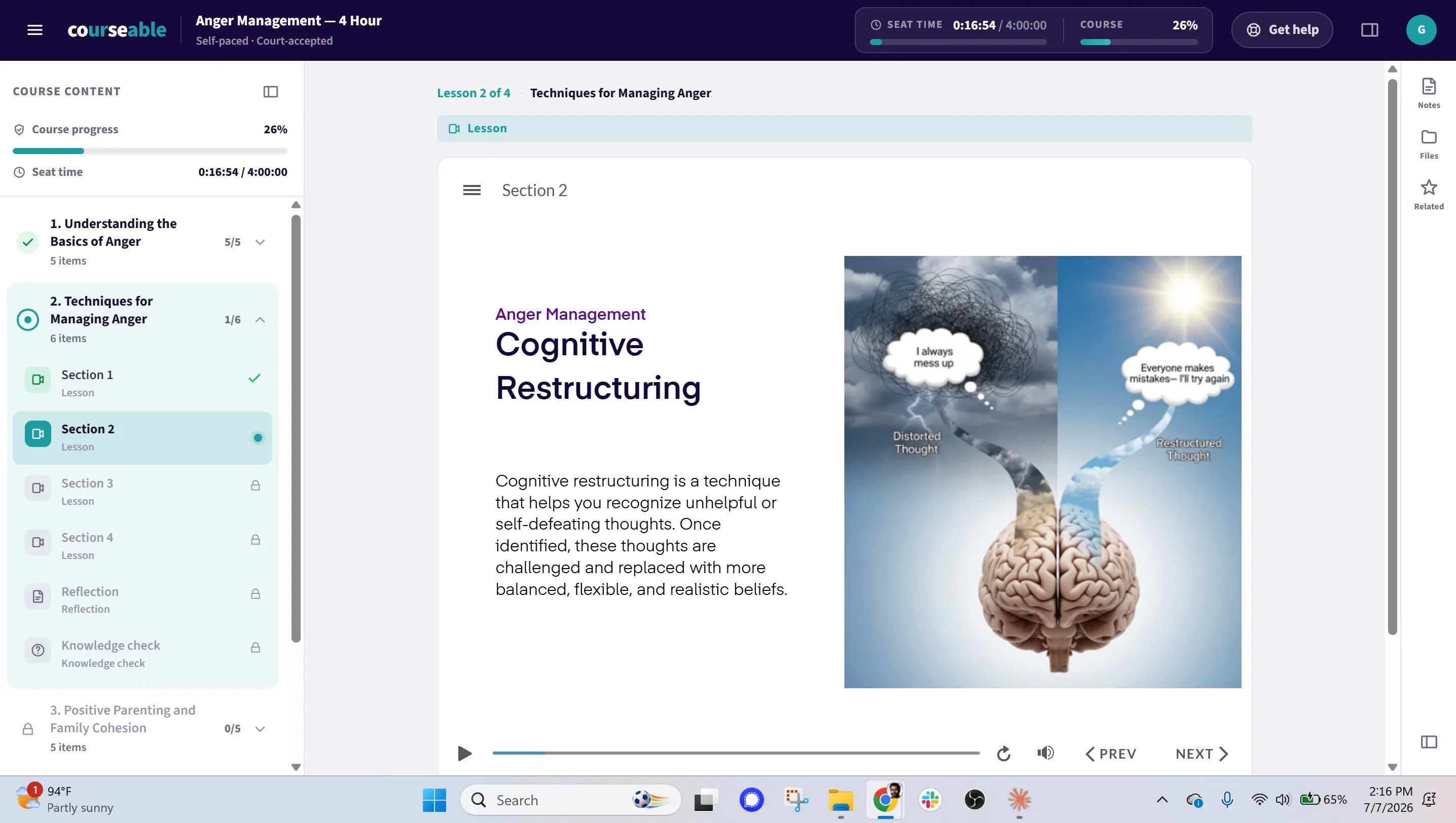
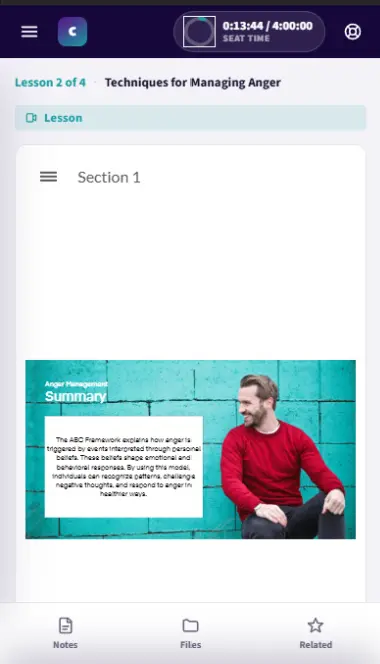
Over 50% finish on their phone.
Choose your required hours and create your account in under 2 minutes.
An official letter for your court or attorney that shows you've started.
Learn on any device. Stop and resume anytime — your progress is saved.
Ready the moment you pass. Print it or email it straight to your court.
Requirement met. Get back to your life.
Evidence-based lessons in impulse control and decision-making — real skills, not filler. Longer courses build on the shorter ones.

Decades of experience as a researcher, clinician, and educator. Jennifer built this curriculum around the cognitive-behavioral skills courts look for — impulse control, decision-making frameworks, and emotion regulation — turned into practical strategies that hold up in real life.
16 lessons in the 16-hour course, plus a final test.
Judges, probation officers, and diversion programs assign impulse-control and decision-making classes for many situations, including:
Whatever brought you here, the class is judgment-free and focused on practical skills — most students tell us they got more out of it than they expected.
Ordered to take anger management or alcohol/drug awareness instead? We offer those classes too.
Courts across the country accept this online class no matter which city your case is in — there's no classroom to drive to and no session schedule to work around. You finish from any device, anywhere in your state, and your certificate verifies instantly. If your order requires an in-person program (rare), confirm with your probation officer first — and you're always covered by the 100% acceptance guarantee.
Find your state's court class information →Detailed answers about our court-approved impulse control & decision-making class.
Yes, 100% guaranteed. Our courses are accepted by courts in all 50 states. If your court doesn't accept our certificate for any reason, we'll give you a full refund.
An impulse control class is a cognitive-behavioral skills course that courts, probation officers, and diversion programs order when a charge involved acting on impulse — commonly petty theft or shoplifting, disorderly conduct, vandalism, or a first offense. It teaches practical skills: pausing before acting, managing strong emotions, weighing consequences, and recognizing the thinking traps behind poor decisions.
This is that class. Our curriculum includes dedicated impulse-control and emotion-regulation lessons, and your certificate documents the curriculum and hours completed — accepted by courts in all 50 states, or your money back.
If your paperwork says impulse control, decision-making, thinking errors, or making better choices — yes. Courts commonly order impulse-control classes for theft-related charges, and this course teaches the skills those orders require: impulse control, consequence thinking, and better decision-making.
If your order specifically names a "theft awareness" or "anti-theft" class instead, contact our support team before enrolling and we'll confirm the right fit. Either way, you're protected by our 100% acceptance guarantee.
Yes. "Decision-making" and "impulse control" are two names courts use for the same type of cognitive-behavioral skills class. Our curriculum covers both — a complete decision-making framework plus dedicated impulse-control and emotion-regulation lessons — and your certificate documents the full curriculum and hours completed. Courts that order "decision-making" accept this class — guaranteed, or your money back.
Almost always, yes. These are different names for the same family of CBT-based classes, and our curriculum covers the required skills: recognizing thinking traps, managing impulses, weighing consequences, and making values-based choices. If your order names a specific licensed program (like Thinking for a Change® or MRT®), check with your probation officer first. Either way, you're protected by our 100% acceptance guarantee.
Yes. "Adult Decision-Making Course" is the name many prosecutors' diversion programs and probation departments use for this requirement. This is a 100% online adult decision-making course covering the decision-making and impulse-control skills those orders require, and your certificate documents the curriculum and hours completed. If your paperwork uses that name, this course satisfies it — from anywhere in the country, backed by our 100% acceptance guarantee.
Our curriculum is created by Jennifer Connor-Smith, PhD, a licensed psychologist and cognitive-behavioral-therapy expert who specializes in decision-making and behavioral science. You'll learn:
Even students who initially enrolled just to meet a court requirement report gaining practical skills they use at work and at home.
Check your court order or ask your attorney. The required hours should be specified in your court documentation, plea agreement, or probation terms.
If you're unsure, here are some general guidelines:
When in doubt, choose more hours. A longer certificate satisfies a shorter requirement. Courts accept certificates that exceed the minimum requirement.
Still unsure? Reach our support team — we're happy to help.
That depends on the length your court requires — 4, 8, 12, or 16 hours. Many students complete the 4-hour course in one sitting; you can also stop and resume anytime — your progress is automatically saved.
This class is 100% self-paced. There are no weekly classes to attend and no waiting periods.
You can complete the entire course in one sitting if you wish, or break it up over several days. You have full control over your schedule.
If your court order specifically requires "weekly sessions," this self-paced course may not meet that specific requirement. For standard hourly requirements, this self-paced format is widely accepted.
Yes — our course works on any device. Over 50% of our students complete their course entirely on their phone.
You can switch between devices anytime. Start on your phone during lunch, continue on your laptop at home — your progress is automatically saved and synced.
No app download required. The course runs in your web browser (Chrome, Safari, Firefox, or Edge) on iPhone, Android, iPad, tablets, laptops, and desktop computers.
This is an adult class. If a court ordered a class for someone under 18, contact our support team before enrolling and we'll help you find the right fit.
Immediately. As soon as you complete the course, your certificate is ready to download. You can print it or email it directly to your attorney or probation officer.
Still have questions? We're here to help. Contact us →
Marcus
Court ordered me to take a decision-making class and I expected to just click through it. Instead I actually learned a framework I now use at work and at home. Certificate was accepted with no problems.
Renee
The lessons on impulse control and emotion regulation hit home for me. It was easy to follow and I could do it on my phone between shifts.
Tyler
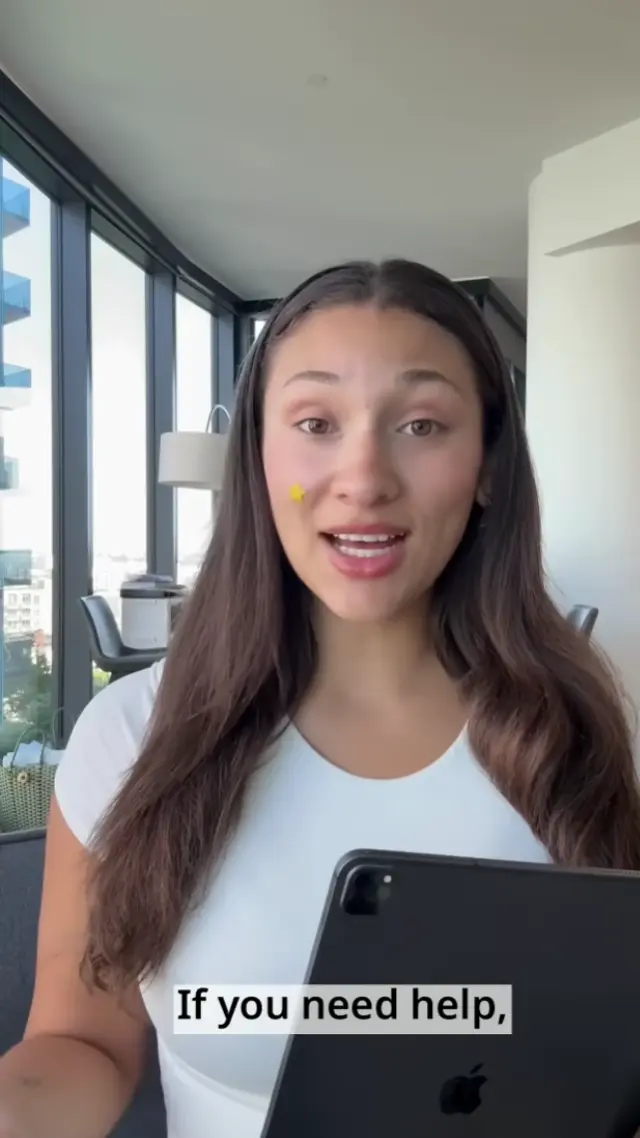
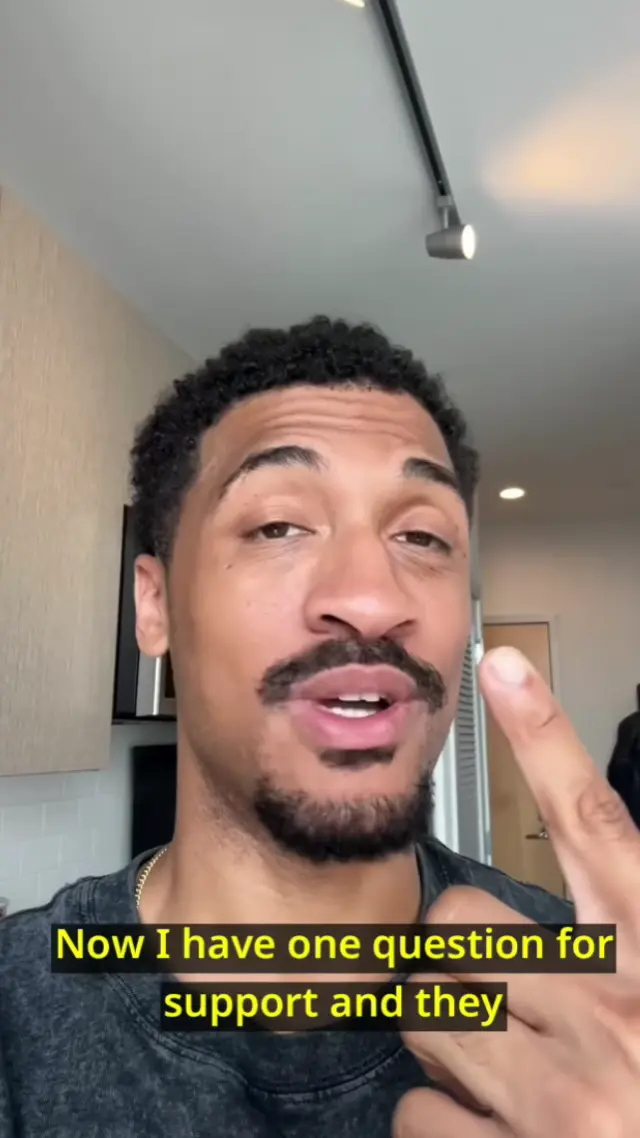
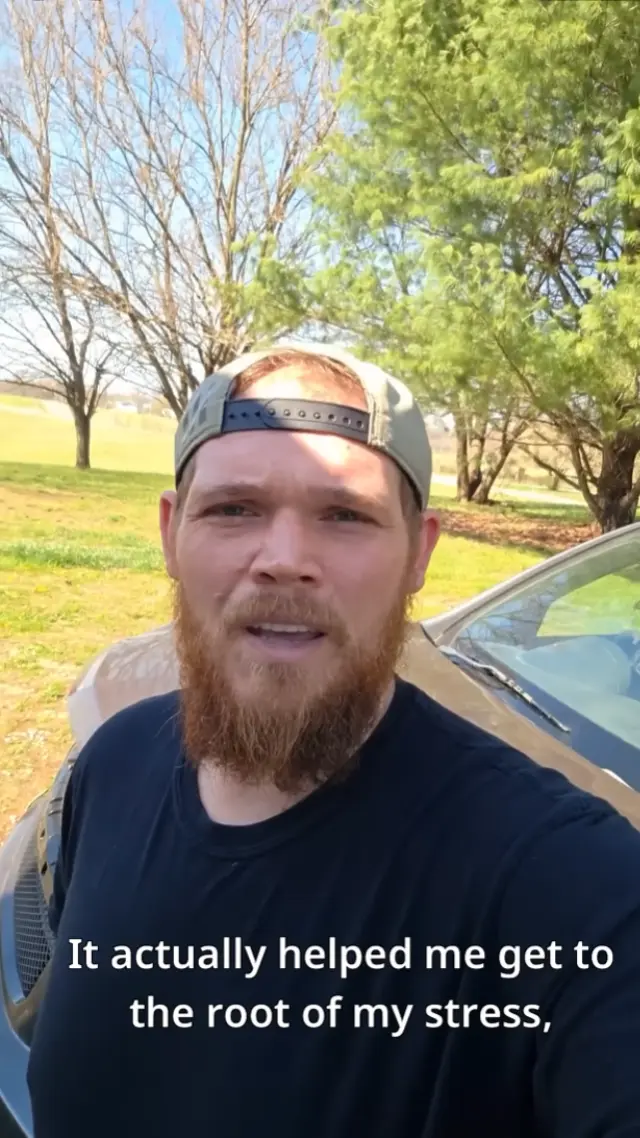
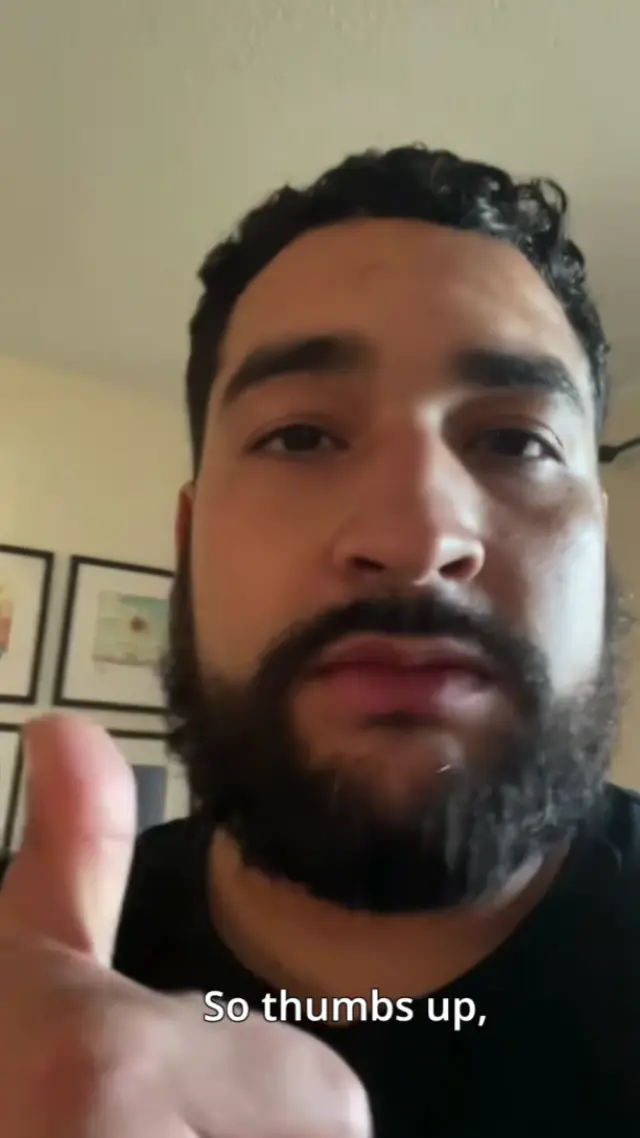
Cheapest court-approved decision-making course I could find, and it didn't feel cheap. Clear, practical, and my court accepted it the same week.
Alicia
I took the 12-hour course. The section on values and goals genuinely changed how I plan things. Way more useful than I thought a required class would be.
Devon
Finished the whole thing in a weekend and had my certificate instantly. The conflict and communication lessons were the most helpful part for me.
4.7
from 840 reviews
1,700+ verified users Read All Reviews →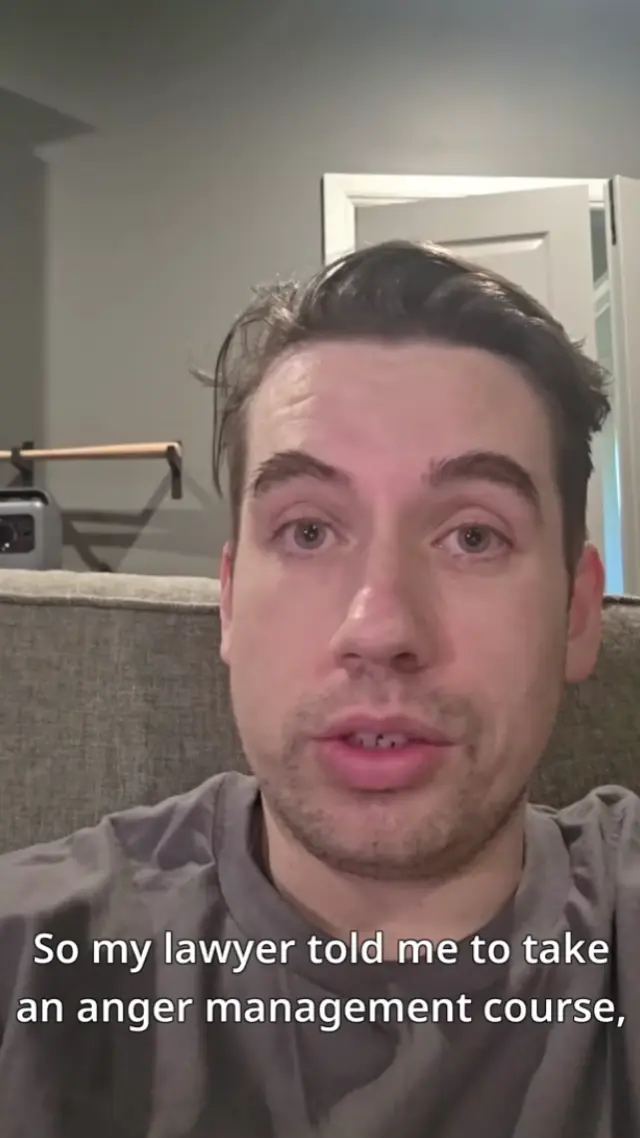
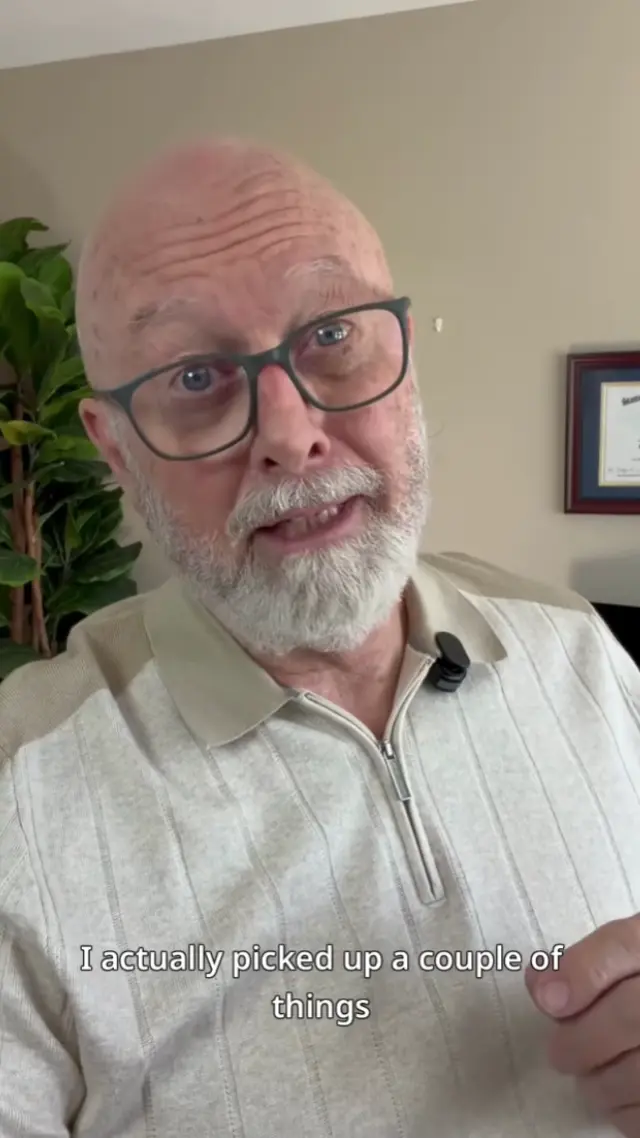

Start now — most students finish in one sitting and have their certificate the same night.
Pick Your Course →Tap to zoom · drag to pan
Tap outside the image or press Esc to close