Anger Management Classes Near Me: Local vs. Online Options (and What Courts Accept)
April 3, 2025 · Arlene Archer, PsyD, CAMS-I , Doctor of Psychology & Certified Anger Management Specialist
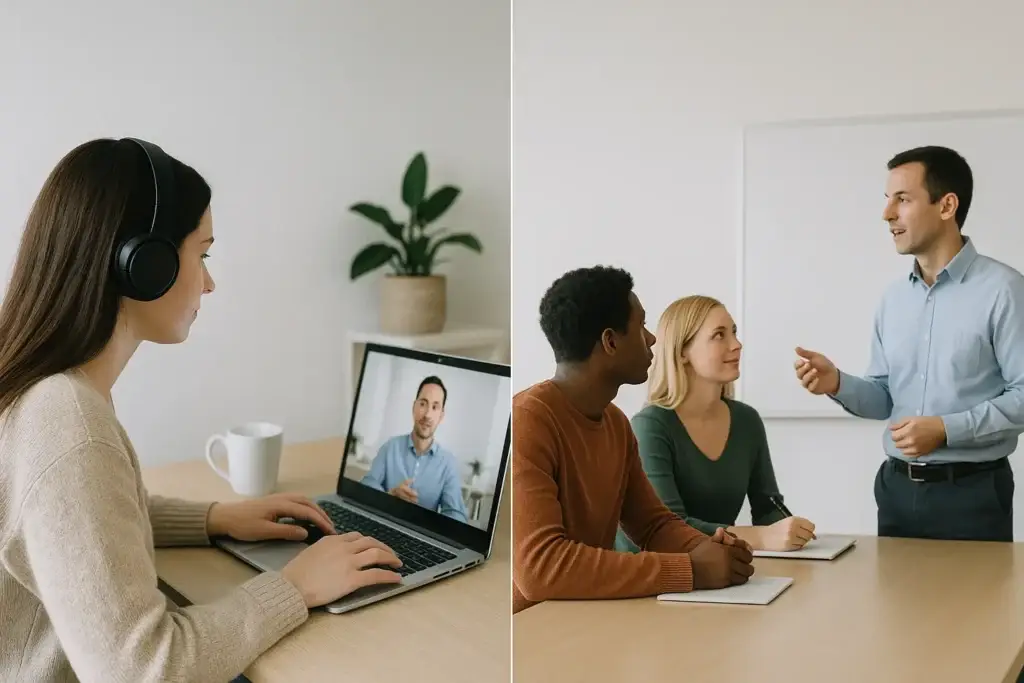
If you’ve just typed anger management classes near me into a search bar, you’re probably working against a deadline — a court date, a probation check-in, or an employer requirement — and you want something nearby, legitimate, and done.
Here’s what that search usually turns up: a handful of local providers with fixed weekly schedules and a lot of online programs. Both can satisfy a court order if you pick correctly. This guide shows you how to actually find local classes, when in-person is the right call, why so many “near me” searches end up online anyway, and how to verify that whatever you choose will be accepted by your court.
Anger Management Classes Near Me: Where to Actually Look
If you want an in-person class, skip the ads and go to the sources courts themselves use:
- Your courthouse or court clerk. Many courts keep a list of local programs they already accept. This is the single most reliable starting point.
- Your probation officer or case manager. If you’re on probation, your officer can often refer you directly to an approved local program — sometimes at reduced cost.
- County probation and diversion resources. Many counties publish provider lists for court-ordered programs on their websites.
- Community mental health centers. County and city mental health programs frequently run anger management groups, often on a sliding fee scale.
- Licensed counselors and therapists. Private practitioners in your area may offer anger management classes or one-on-one programs; confirm they can document hours in a format your court accepts.
One caution: A class being local doesn’t automatically make it court-approved. A nearby program with no credentials or documentation is just as risky as a sketchy website. The verification checklist at the end of this post applies to every option, in-person or online.
Why “Near Me” Searches Often End Up Online
Plenty of people start out wanting a local classroom and finish an online course instead. The usual reasons:
- Scheduling. Local classes typically run at fixed times — often one evening a week for 8, 12, or 26 weeks. Miss a session because of work or childcare and your completion date slips.
- Availability. In rural counties, the nearest approved provider can be an hour’s drive away, with a waitlist on top of that.
- Cost. In-person programs carry per-session fees plus travel, parking, and time off work. Online classes are usually cheaper end to end.
- Privacy. Some people do their best work in a group; others dread running into a coworker in the parking lot. Online classes remove that worry entirely.
None of this makes local classes wrong — it just explains why the online option, where courts allow it, has become the default for so many people.
Local vs. Online Anger Management Classes: Side by Side
| Local in-person classes | Online classes | |
|---|---|---|
| Travel | Commute to a fixed location every session | None — any device, anywhere |
| Schedule | Fixed weekly sessions, set start dates | Self-paced, 24/7; finish as fast as your court allows |
| Privacy | Group setting, less anonymity | Fully private |
| Price | Varies by provider; per-session fees plus travel costs | Usually lower flat pricing (Courseable from $35) |
| Court acceptance | Often pre-approved by local courts | Widely accepted, but confirm with your court first |
| Best for | Court orders requiring in-person attendance; people who want live group discussion | Busy schedules, rural areas, privacy, lower cost |
What Courts Accept — and Why It Varies
There’s no national rule here: Acceptance of online classes varies by state, county, and even the individual judge. Some court orders explicitly require in-person attendance; most simply require a program that meets the court’s standards — credentialed instruction, documented hours, and a verifiable certificate. We break down exactly how that approval works in our guide to whether online anger management classes are accepted in court.
It’s worth hearing how the people who screen these programs actually think. Alexandria Hawkins, a former U.S. Probation Officer, is candid about the skepticism online programs can face:
“Typically online programs aren’t always looked at favorably. Programs that essentially ask for a fee for guaranteed certificates were red flags. The officer would need to do research to ensure it’s a reputable company.”
That default skepticism is exactly why the verification checklist below matters: a legitimate program — credentialed curriculum, real hour tracking, a certificate the court can verify — survives the officer’s research. A pay-for-certificate operation doesn’t.
Because rules differ by location, it helps to look at your state specifically. Our state-by-state course pages cover anger management requirements and acceptance for all 50 states — for example:
- Anger management classes in California
- Anger management classes in Texas
- Anger management classes in Florida
When a Local Class Is the Right Call
Online isn’t always the answer. Choose an in-person program when:
- Your court order explicitly requires in-person attendance — this overrides every convenience argument
- Your judge or probation officer has directed you to a specific local provider
- You genuinely benefit from live group discussion and face-to-face accountability
- You have limited or unreliable internet access
If any of those apply, use the courthouse and probation resources above to find a program your court already trusts.
Checklist: Verify Any Class With Your Court
Whether the class is around the corner or online, run through this before paying:
- Read your court order carefully. Note the required hours and any language about “in-person,” “court-approved,” or named providers.
- Ask the clerk or your probation officer directly: “Is [this provider] acceptable for my requirement? Is online completion allowed?”
- Check credentials. The program should name the licensed or certified professionals behind its curriculum.
- Confirm documentation. You need a verifiable certificate of completion, and ideally tracked hours, included in the price.
- Keep records. Save your enrollment confirmation, certificate, and any written approval from the court.
Ten minutes of verification up front beats redoing the class later at your own expense.
The Bottom Line
“Near me” is how the search starts, but the real question is “what will my court accept?” Local classes are a solid option when your order requires them or you want a live group. For most people, though, a court-accepted online class delivers the same compliance with less cost, travel, and scheduling stress. If you’re weighing formats, hour requirements, and how enrollment works, our guide covering everything you need to know about online anger management classes walks through the whole process.
Whichever you choose, verify first — then get started.
Skip the commute — complete your class from home
Court-accepted, self-paced anger management classes with an instant certificate the moment you finish.
Start your class todayFrequently Asked Questions
Are there anger management classes near me?
Most counties have at least some in-person options — community mental health centers, private counselors and therapists, and court- or probation-referred programs. Availability varies widely by area, especially in rural counties, which is why many people who start with a local search end up choosing a court-accepted online class instead.
Do courts accept online classes instead of local ones?
Many courts do, but acceptance varies by state, county, and even the individual judge. Read your court order first — if it doesn't explicitly require in-person attendance, ask the court clerk or your probation officer whether an online provider is acceptable before you enroll.
How do I find court approved classes in my state?
Start with your court order and your probation officer — they may keep a list of approved providers. Then confirm the provider covers your state and required hours. Courseable publishes state-by-state anger management course pages for all 50 states so you can check details for your location.