New York Court-Approved Anger Management Class

4.9 out of 5 based on 156 reviews

Are Online Anger Management Classes Accepted in New York State?
✅ Yes. In New York, courts in all counties — including New York City (Bronx, Kings, Queens, Manhattan, Staten Island) — accept online anger management courses as long as they are approved by your judge or probation officer. Online anger classes are accepted in both criminal court cases (such as probation or sentencing conditions) and family court cases (such as custody or restraining order matters).
All Courseable courses are created by certified experts based on standard accepted curriculum standards and we maintain full documentation to support any court request. 

Start Here: Choose Your Course

4-Hour Anger Management Class

$25

What You Get:

100% Money Back Guarantee

Start strong: spot triggers, practice quick calm‑down skills (ABC & mindfulness), and leave with a simple personal plan.

Ideal for:

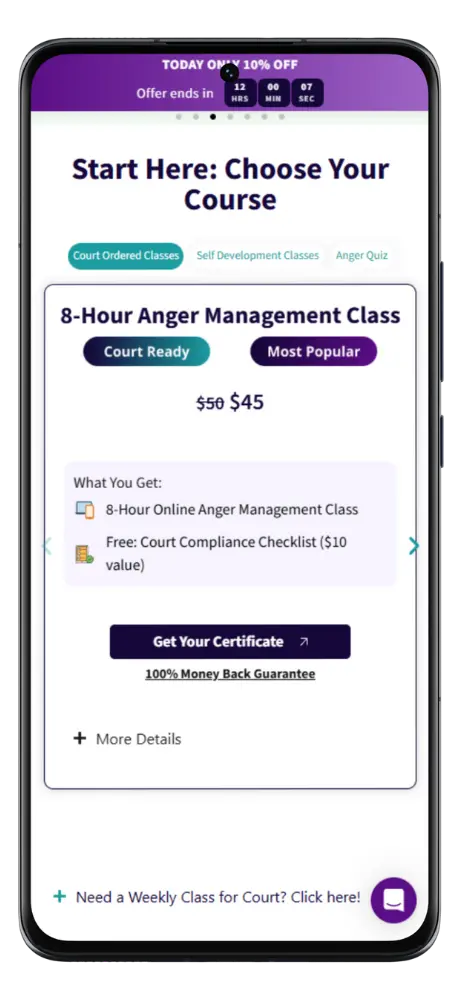
8-Hour Anger Management Class

$50 $45

What You Get:

100% Money Back Guarantee

Go deeper: everything in 4‑Hour plus family/parenting strategies, communication & conflict skills, and resilience habits to prevent relapse.

Ideal for:

work-case-filled

12-Hour Anger Management Class

$75 $65

What You Get:

100% Money Back Guarantee

Full deep‑dive: everything in 8‑Hour plus brain‑body science, self‑talk rewrites, legal/social awareness, real‑life scenario practice, and a long‑term success plan.

Ideal for:

work-case-filled

4-Week Anger Management Class

$25

What You Get:

100% Money Back Guarantee

Start strong: spot triggers, practice quick calm‑down skills (ABC & mindfulness), and leave with a simple personal plan.

Ideal for:

8-Week Anger Management Class

$50 $45

What You Get:

100% Money Back Guarantee

Go deeper: everything in 4‑Hour plus family/parenting strategies, communication & conflict skills, and resilience habits to prevent relapse.

Ideal for:

work-case-filled

12-Week Anger Management Class

$75 $65

What You Get:

100% Money Back Guarantee

Full deep‑dive: everything in 8‑Hour plus brain‑body science, self‑talk rewrites, legal/social awareness, real‑life scenario practice, and a long‑term success plan.

Ideal for:

work-case-filled

4-Week Anger Management Class

$25

What You Get:

100% Money Back Guarantee

Start strong: spot triggers, practice quick calm‑down skills (ABC & mindfulness), and leave with a simple personal plan.

Ideal for:

8-Week Anger Management Class

$50 $45

What You Get:

100% Money Back Guarantee

Go deeper: everything in 4‑Hour plus family/parenting strategies, communication & conflict skills, and resilience habits to prevent relapse.

Ideal for:

work-case-filled

12-Week Anger Management Class

$75 $65

What You Get:

100% Money Back Guarantee

Full deep‑dive: everything in 8‑Hour plus brain‑body science, self‑talk rewrites, legal/social awareness, real‑life scenario practice, and a long‑term success plan.

Ideal for:

work-case-filled

Not Sure Which Course To Take?

Take The Free
Anger Management Assessment

The Reset Class

4 Hours of anger management training

$25

Learn the basic tools to identify triggers, calm intense emotions, and start building healthier habits.

Perfect for anyone new to anger management.

What You Get:

100% Money Back Guarantee

The Breakthrough Class

8 Hours of anger management training

$50 $45

Build on the basics with deeper communication skills and exercises that help you manage stress, conflict, and relationships with confidence.

What You Get:

100% Money Back Guarantee

The Transformation Class

12 Hours of anger management training

$75 $65

Our most complete program — includes everything from trigger awareness to long-term emotional balance and relationship repair.

Best for lasting personal growth and behavioral change.

What You Get:

100% Money Back Guarantee

Not Sure Which Course To Take?

Take The Free
Anger Management Assessment

Not Sure Which Course To Take?

Take The Free
Anger Management Assessment

Meet Your Court Requirement

Recent Reviews from New York Users Like You

Extremely helpful and user friendly . It was easy to follow, flexible, and it gave me the tools to manage my emotions and communicate better. The pricing was also very competitive for the amount of content provided. Highly recommended to anyone looking to gain better control over their emotions.

Thomas M.

(New York City)

This was a subtle way to learn how to cope with anger. I also liked how everything was online and accessible on my phone. That made a whole lot of difference because I could take the course while I was moving around too. I feel it has made me a better a person. Thank you

Jennifer T.

(Amityville, NY)

I took this course as advised by my lawyer to help with having visitations with my son. Not having any idea if it would help or not, I did it. I found it to be something 99 percent of people could benefit from. I believe every single person have some anger issues no matter what their triggers are. I will reflect back to this course as needed.

Christopher I.

(Brooklyn)

This Course Is Also Known As

Get Your NY State Court Approved Certificate TODAY

Enroll in Minutes

Pick your course, check out securely, and get instant access.

Learn at Your Own Pace

Self-paced lessons you can start, stop, and resume anytime.

Download Your Certificate

Your certificate is ready the moment you pass — even sent to your PO or attorney.

Read Our Customer Reviews

Meet Your Court Requirement

Fits The Requirements in These Counties

Video Testimonials

Learn Why 1000s of New York Students Have Trusted Courseable

Our Courses Are Accepted by all New York State Courts

Our courses are designed to fit the curriculum requirements of all courts in the state of New York.

The Curriculum is Created by a Certified Anger Management Specialist

Tiffany Gorham is an anger management expert licensed in cognitive behavioral therapy. She has years of experience helping individuals learn to manage their anger and express it in ways that are healthy and good. She has her Masters of Science from Fresno University.

Meet Your Court Requirement

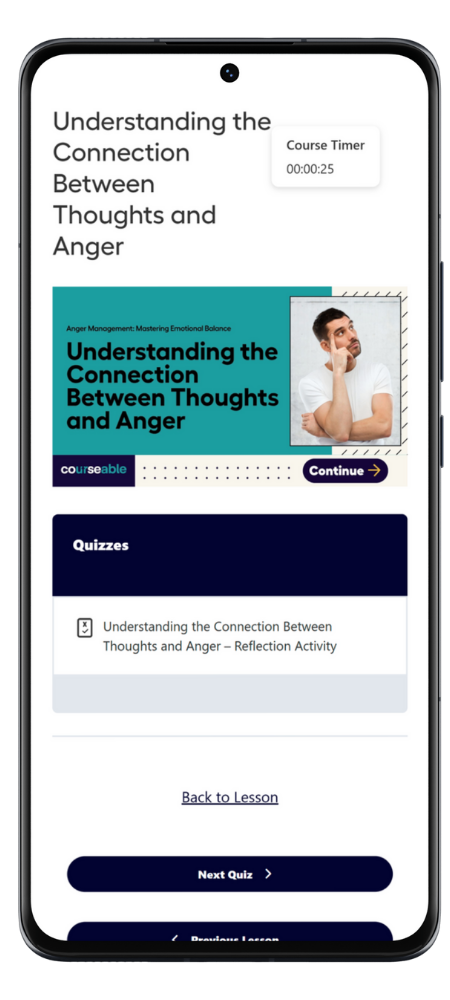
You Can Take the Course on Any Device (Phone, Tablet & Laptop)

No app required. No Zoom. Just click and go from your laptop, tablet, or phone.

We are Endorsed by Probation Officers & Attorneys

Experienced probation officers and attorney’s have reviewed this course and given it their endorsement.

Our Users Love Us

We are loved by our users. Read our reviews to see all the reasons why.

Megan Downey
Megan Downey
Very helpful content, i love it self paced and that they give you guides and downloads to keep and tricks and tips! Best online course ever!
JR
JR
Very easy to navigate
Robert T.
Robert T.
This course was very helpful.
J Chung
J Chung
Excellent Material, Easy to Understand, Affordable Price.

98% of Our Students Pass on the First Try

Practice questions after each lesson makes the final quiz a breeze to pass.

You Can Get Your Official Certificate the Same Day

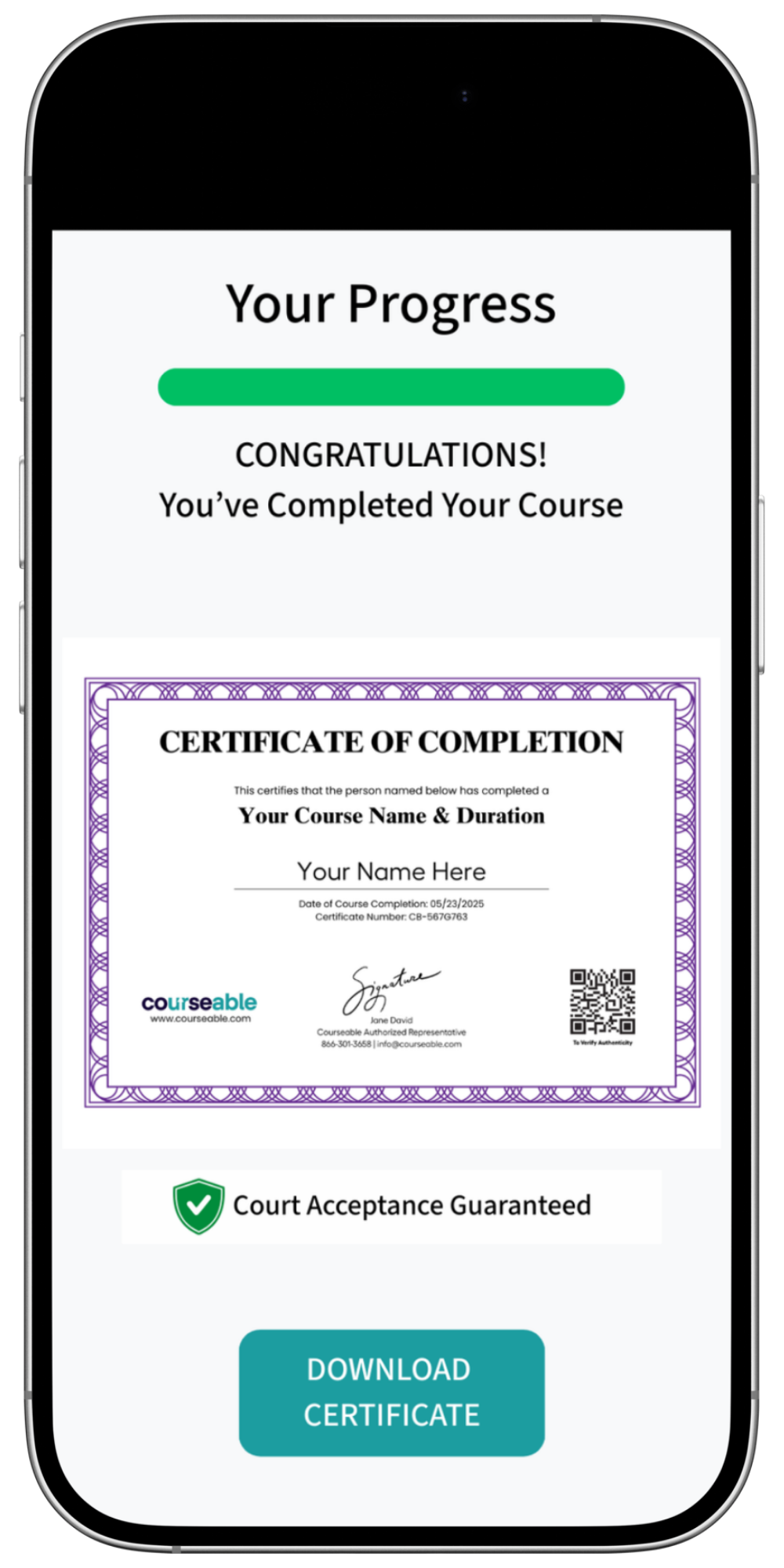
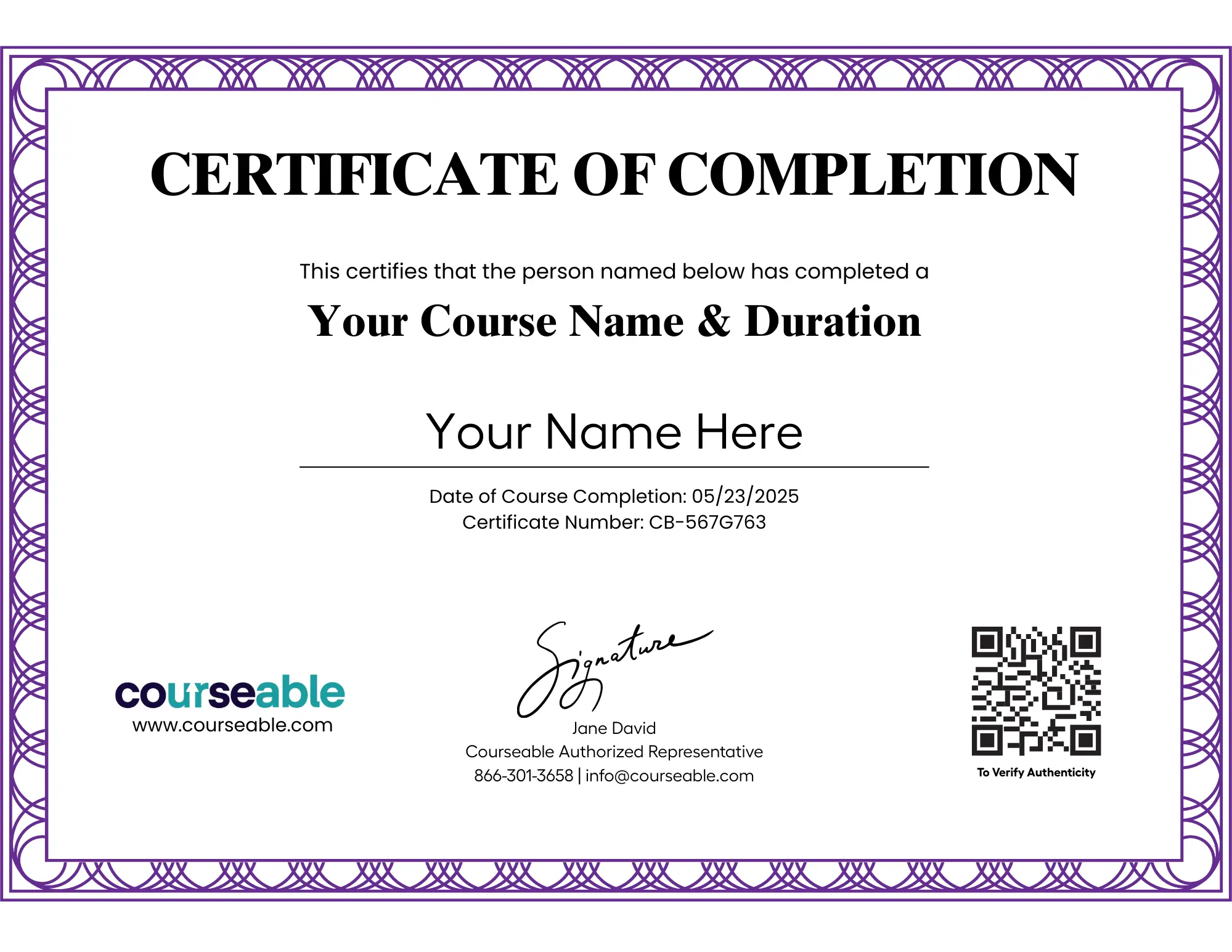
Download your digital certificate as soon as you complete the course. Each certificate can be verified digitally for authenticity.

Our U.S. Based Support Team is Here to Help You

Have questions? We are a U.S. based company with a local support team. Just give us a call, chat with us or send us an email and we will help you right away.

Built With Probation Officers in Mind

Courseable gives you the tools you need to track progress, verify enrollment, and support your parolees with confidence.

Everything You Need to Know About This New York Anger Management Class

Have questions? We’ve got answers!

Are online classes accepted in New York City courts?
✅ Yes. Courts in all five NYC boroughs — Bronx, Kings (Brooklyn), Queens, Manhattan, and Staten Island — allow defendants or parties to complete court-ordered anger management online. Providers like Courseable have issued certificates that are routinely accepted by NYC criminal courts, probation departments, and Family Court judges.
Does New York State in general accept online anger management courses?
Yes. New York courts generally accept online anger management classes for both criminal and family court cases. There is no statewide requirement that these courses be taken in person, and no New York counties are known to prohibit online anger management. Judges and probation officers have the discretion to approve reputable online programs that issue official completion certificates.
Do I need pre-approval for an online class in New York?
In most cases, New York judges and probation officers accept online certificates without issue. However, it’s always best to confirm with your attorney or probation officer before enrolling, especially in criminal court cases. Courseable provides same-day enrollment letters and verifiable certificates to make this process easier.
What if my New York court order specifies hours or weeks?
New York courts often order courses of specific durations (e.g., 8, 12, or 16 hours, or 12 weeks). Courseable offers multiple course lengths to match your exact requirement. Our certificates clearly state the number of hours completed, so your court or probation officer can easily verify compliance.

Are the online anger management classes offered by Courseable court-approved?

Yes, they are. The content of the classes has been created by an NAMS-certified anger therapist, based on the Cognitive Behavioral Therapy methodology, and should meet all court requirements. After serving 100s of students, we have a perfect 100% approval rate.

How do I get a court to approve your online anger management class?

Acceptance is at the discretion of the judge in your specific case. The safest method is to have your attorney file a motion with the court requesting permission to use our online program. You should not enroll until you have a signed court order explicitly approving it.

What's the difference between "Anger Management" and a "Batterer's Intervention Program"?

They are completely different. General Anger Management teaches skills to handle the emotion of anger. A BIP is a highly regulated, year-long program for domestic violence offenders that addresses themes of power, control, and the effects of violence on victims, as required by state law. Mistaking one for the other can lead to a probation violation.

Is there a money-back guarantee?

Yes, if for any reason your class certification is not accepted by a court, just let us know and we will 100% of your money back.

How soon can I get my certificate?

Immediately. After you complete your final quiz you will get your certificate immediately. We will also send your certificate to your Attorney, Probation Officer or Court (optional based on your preference)

Can I get an enrollment letter?

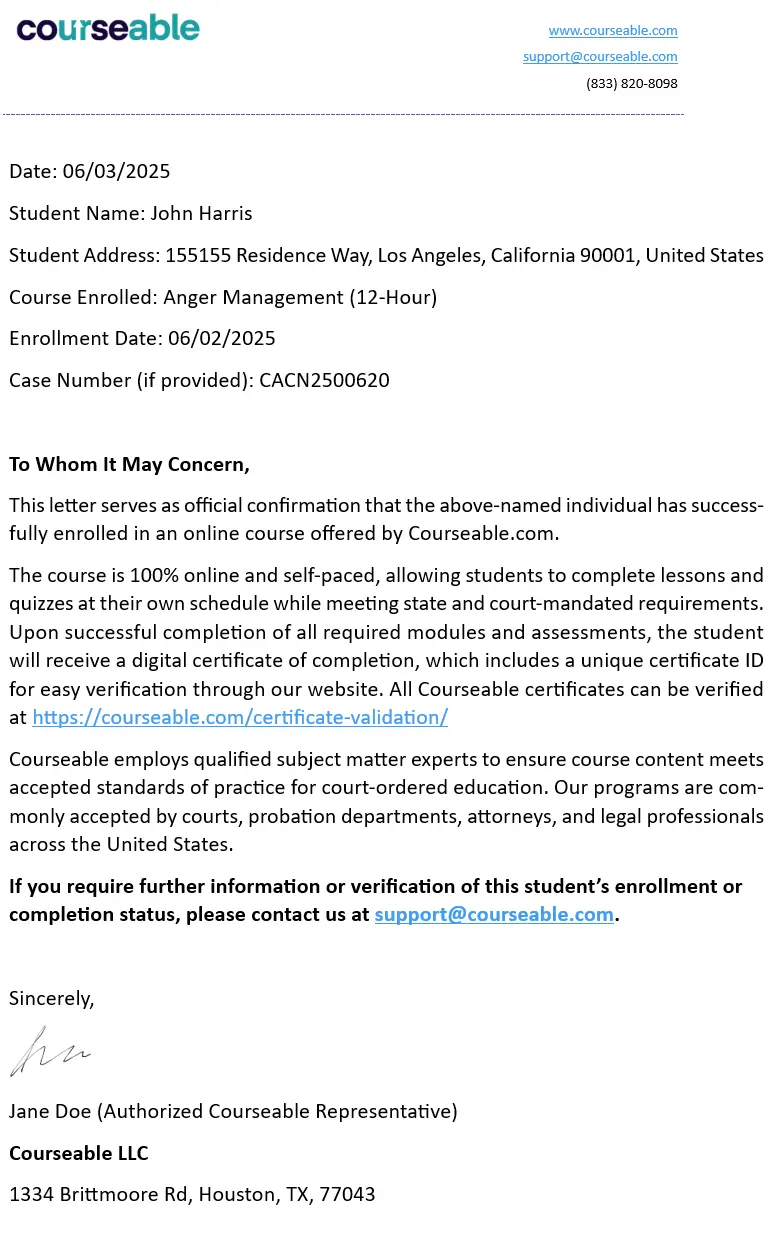
Yes, after you sign up and complete the intake form you’ll be given an enrollment letter.

Can I really take my course from my phone?

Yes, you can access the courses in Courseable from any device. No app or download is required.

Are the courses self-paced?

Yes, you can take all the courses at your own pace and be issued a certificate of completion when you complete all the materials and quizzes. 

What if I need help?

If you need help, you can chat with us using the 24X7 chat support, call us or send us an email. Someone from our USA based support team will assist you.

What is Courseable?

Courseable is the next-generation online education platform providing certified court and self-development classes.

FREE Bonus: Get Our Personal Finance Mastery eBook — Included with Your Enrollment

Sign up for any Anger Management class and you’ll instantly get our exclusive eBook, Personal Finance Mastery. Inside, you’ll find 40+ AI-powered prompts to help you:

✅ Build a personalized budget
✅ Cut expenses and grow savings
✅ Improve your financial habits for good

🎯 Yours automatically with enrollment — no extra cost, no catch.

👉 Don’t just meet court requirements. Take charge of your future.

Courseable vs Others Court Courses

Find what sets Courseable apart from the other providers.

Courseable

Others

Included With This Course

Step-by-Step Compliance Checklist (Digital Download)

$15 value, Yours for FREE

Passing the course is the easy part. But staying compliant with court requirements involves much more than just completing your test.

You need to know exactly what documents to submit, who to send them to, and when each deadline hits. Missing even one step can derail your entire process.

That’s why when you buy this course you will also get this Step-by-Step Compliance Checklist, which includes:

Time-sensitive action items organized by phase — from pre-trial through course completion
Critical deadlines and documentation requirements — never miss an important date
Provider verification steps — ensure your course is 100% court-approved before you start

🎯 Yours automatically with enrollment — no extra cost, no catch.

100% Court Approved Curriculum

Each Lesson includes interactive content, resources, worksheets and a knowledge check.

Lesson 1: Understanding Anger and Its Impact

Explore the foundational concepts of anger, what it is, and its physical and cognitive manifestations. The segment delves into the consequences of chronic, unmanaged anger. Activities involve identifying personal triggers and responses, and reflecting on how thoughts influence anger. A knowledge check reinforces understanding of anger triggers and the nature of unmanaged anger.

Lesson 2: Techniques for Managing Anger

Introduce practical techniques for managing anger, including the ABC Model (Activating event, Beliefs, Consequences) to understand emotional responses. This part covers challenging unhelpful thoughts and common cognitive distortions. Relaxation strategies and behavioral techniques are also touched upon, with activities designed to apply these concepts in real-life scenarios.

Lesson 3: Emotional Regulation and Mindfulness

Develop emotional regulation and mindfulness skills as tools for anger management. This section explains the value of mindfulness in gaining awareness of internal and external states without judgment. Participants will engage in practice exercises, including guided mindfulness meditation and breathing techniques. The importance of self-compassion in managing anger is also highlighted.

Lesson 4: Personal Anger Management Plan

Guide participants in developing a personalized anger management plan. This section revisits effective strategies and provides a framework for setting SMART (Specific, Measurable, Attainable, Realistic, Time-bound) goals. The module also identifies early warning signs of anger and reinforces the importance of self-awareness, emotional regulation, and successful communication traits for managing anger effectively.

Final Test

The final quiz consists of 20 questions covering the content from the lessons you just covered. A score of 75% or more is considered a passing score.

Lesson 1: Understanding Anger and Its Impact

Explore the foundational concepts of anger, what it is, and its physical and cognitive manifestations. The segment delves into the consequences of chronic, unmanaged anger. Activities involve identifying personal triggers and responses, and reflecting on how thoughts influence anger. A knowledge check reinforces understanding of anger triggers and the nature of unmanaged anger.

Lesson 2: Techniques for Managing Anger

Introduce practical techniques for managing anger, including the ABC Model (Activating event, Beliefs, Consequences) to understand emotional responses. This part covers challenging unhelpful thoughts and common cognitive distortions. Relaxation strategies and behavioral techniques are also touched upon, with activities designed to apply these concepts in real-life scenarios.

Lesson 3: Emotional Regulation and Mindfulness

Develop emotional regulation and mindfulness skills as tools for anger management. This section explains the value of mindfulness in gaining awareness of internal and external states without judgment. Participants will engage in practice exercises, including guided mindfulness meditation and breathing techniques. The importance of self-compassion in managing anger is also highlighted.

Lesson 4: Positive Parenting and Family Cohesion

Address anger specifically within the context of parenting and family relationships. Explore positive parenting strategies and the role of boundaries in fostering family cohesion. This segment helps angry parents understand how to respond to children’s upset constructively and encourages positive reinforcement. Activities include exploring personal anger and identifying strategies for coping with it in a family setting.

Lesson 5: Communication and Conflict Resolution

Teach effective communication and conflict resolution skills essential for managing anger in interactions. This part covers active listening, “I” statements, and understanding non-verbal language. Participants will learn how to express themselves assertively during disagreements and analyze conflict situations. Common relapse triggers in anger management and the importance of support systems are also addressed.

Lesson 6: Building Emotional Resilience

Focus on building emotional resilience as a key component of long-term anger management. This section explores the ability to adapt to stress and emotional challenges. Through review questions and scenarios, participants practice applying resilient responses to difficult situations. The module reinforces coping strategies and the importance of self-care practices like journaling, mindfulness, and calmative breathing.

Lesson 7: Personal Anger Management Plan

Guide participants in developing a personalized anger management plan. This section revisits effective strategies and provides a framework for setting SMART (Specific, Measurable, Attainable, Realistic, Time-bound) goals. The module also identifies early warning signs of anger and reinforces the importance of self-awareness, emotional regulation, and successful communication traits for managing anger effectively.

Lesson 8: Path to Success

Concentrate on maintaining progress and preventing relapse in anger management. This final lesson helps participants recognize common relapse triggers, such as high stress, fatigue, and negative environments. The module emphasizes staying accountable through support networks and regular check-ins. It also reinforces the continuous practice of self-care and mindfulness for sustained emotional health and anger recovery.

Final Test

The final quiz consists of 20 questions covering the content from the lessons you just covered. A score of 75% or more is considered a passing score.

Lesson 1: Understanding Anger and Its Impact

Explore the foundational concepts of anger, what it is, and its physical and cognitive manifestations. The segment delves into the consequences of chronic, unmanaged anger. Activities involve identifying personal triggers and responses, and reflecting on how thoughts influence anger. A knowledge check reinforces understanding of anger triggers and the nature of unmanaged anger.

Lesson 2: Understanding the Role of Self-Talk in Anger

Focus is placed on the powerful connection between self-talk and anger. This section explains how negative internal dialogue can intensify angry feelings. Participants will engage in activities that involve identifying and rewriting negative thoughts into more constructive ones. A knowledge check assesses understanding of how self-talk fuels anger and the benefits of positive self-talk.

Lesson 3: The Social and Legal Consequences of Unmanaged Anger

Examine the broad-reaching consequences of unmanaged anger on personal, professional, and legal aspects of life. Through interactive exercises, participants reflect on how anger can damage relationships, impact careers, and lead to legal repercussions. The module emphasizes the importance of recognizing these consequences to encourage healthier anger expression.

Lesson 4: The Brain and Body Connection

Delve into the physiological and neurological aspects of anger. This segment covers how the brain processes anger and the physical responses the body exhibits. Activities encourage self-awareness by prompting participants to recall personal experiences of anger and identify their physical signs. Strategies for calming the brain-body system and transitioning from reacting to responding are also introduced.

Lesson 5: Techniques for Managing Anger

Introduce practical techniques for managing anger, including the ABC Model (Activating event, Beliefs, Consequences) to understand emotional responses. This part covers challenging unhelpful thoughts and common cognitive distortions. Relaxation strategies and behavioral techniques are also touched upon, with activities designed to apply these concepts in real-life scenarios.

Lesson 6: Emotional Regulation and Mindfulness

Develop emotional regulation and mindfulness skills as tools for anger management. This section explains the value of mindfulness in gaining awareness of internal and external states without judgment. Participants will engage in practice exercises, including guided mindfulness meditation and breathing techniques. The importance of self-compassion in managing anger is also highlighted.

Lesson 7: Positive Parenting and Family Cohesion

Address anger specifically within the context of parenting and family relationships. Explore positive parenting strategies and the role of boundaries in fostering family cohesion. This segment helps angry parents understand how to respond to children’s upset constructively and encourages positive reinforcement. Activities include exploring personal anger and identifying strategies for coping with it in a family setting.

Lesson 8: Communication and Conflict Resolution

Teach effective communication and conflict resolution skills essential for managing anger in interactions. This part covers active listening, “I” statements, and understanding non-verbal language. Participants will learn how to express themselves assertively during disagreements and analyze conflict situations. Common relapse triggers in anger management and the importance of support systems are also addressed.

Lesson 9: Building Emotional Resilience

Focus on building emotional resilience as a key component of long-term anger management. This section explores the ability to adapt to stress and emotional challenges. Through review questions and scenarios, participants practice applying resilient responses to difficult situations. The module reinforces coping strategies and the importance of self-care practices like journaling, mindfulness, and calmative breathing.

Lesson 10: Real-Life Practice and Scenario Application

Provide opportunities for participants to apply their learned anger management skills in realistic scenarios. This segment encourages reflection on which strategies are most effective for individual life situations. The module emphasizes moving from theoretical understanding to practical application through open-ended questions about challenging scenarios and confidence in using skills in real life.

Lesson 11: Personal Anger Management Plan

Guide participants in developing a personalized anger management plan. This section revisits effective strategies and provides a framework for setting SMART (Specific, Measurable, Attainable, Realistic, Time-bound) goals. The module also identifies early warning signs of anger and reinforces the importance of self-awareness, emotional regulation, and successful communication traits for managing anger effectively.

Lesson 12: Path to Success

Concentrate on maintaining progress and preventing relapse in anger management. This final lesson helps participants recognize common relapse triggers, such as high stress, fatigue, and negative environments. The module emphasizes staying accountable through support networks and regular check-ins. It also reinforces the continuous practice of self-care and mindfulness for sustained emotional health and anger recovery.

Final Test

The final quiz consists of 20 questions covering the content from the lessons you just covered. A score of 75% or more is considered a passing score.

Not sure which anger management class you need?

If your court or employer told you to take an anger management class but didn’t say how many hours, don’t worry—we can help.

Here’s the quick breakdown:

  • 4-Hour Course – Good for minor offenses, skill refreshers, or personal growth.

  • 8-Hour Course – Most commonly accepted when the number of hours isn’t specified.

  • 12-Hour Course – For more serious cases or when a judge or probation officer clearly mandates 12 hours.

📌 If your paperwork doesn’t specify hours, we recommend the 8-hour course. It meets most court and employer requirements and includes everything from the 4-hour version, plus deeper material.